Bible and Border: How Christianity and Colonisation Changed Xhosa Lives
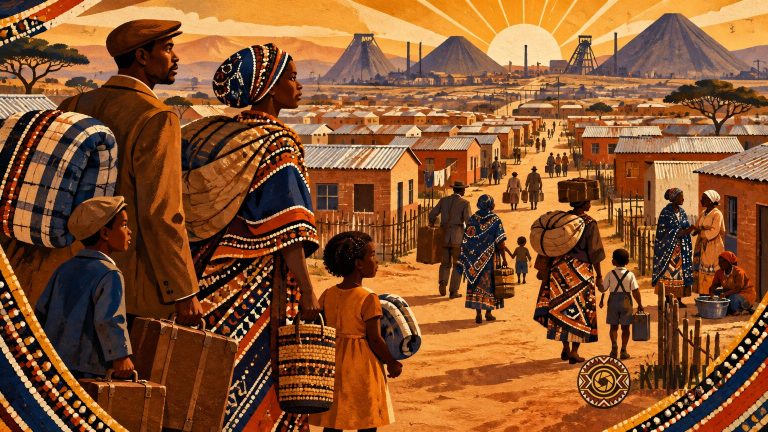
From the early 1800s, two forces arrived on Xhosa land almost together: the missionary and the colonial soldier. Their impact is still felt in every Xhosa family today, including ours.
The first missions
In 1799 Johannes van der Kemp of the London Missionary Society began preaching among the amaXhosa. In the 1820s mission stations such as Lovedale (1824) were founded, later followed by many Methodist, Anglican, Presbyterian and Moravian stations across the Eastern Cape and Pondoland.
Ntsikana – the first Xhosa hymn
Ntsikana, a Xhosa prophet and counsellor, embraced Christianity in the early 1800s and composed Ulo Thixo omkhulu (the Great Hymn), the first known Christian hymn written by a Xhosa person. He showed that faith could be expressed in isiXhosa and through Xhosa music.
The frontier wars
Between 1779 and 1879, the amaXhosa fought nine frontier wars against colonial forces. Land was taken, chiefs were removed, and borders were pushed further east. Missions often sat on these frontiers, and for many people Christianity became linked with colonial power.
The Cattle Killing of 1856–57
After years of war and a cattle lung-sickness epidemic, the young prophet Nongqawuse said that if the people killed their cattle and destroyed their crops, the ancestors would rise and drive out the colonisers. Hundreds of thousands of cattle were killed and tens of thousands of people died of hunger. Many survivors were forced into colonial labour – a turning point that weakened Xhosa independence.
Pondoland’s long resistance
The amaMpondo kept their independence longer than most. Pondoland was only annexed by the Cape Colony in 1894. Later, the Pondoland Revolt of 1960 showed that the spirit of resistance remained strong.
Mission schools and new leaders
Mission education brought reading, writing and new opportunities. Lovedale and Fort Hare (1916) educated writers and leaders such as Tiyo Soga, the first black South African ordained minister, poet S.E.K. Mqhayi, and later Nelson Mandela and Oliver Tambo. Enoch Sontonga, a Methodist teacher, composed Nkosi Sikelel’ iAfrika.
What was lost and what was gained
- Some missionaries called ancestral practices and initiation “heathen”, causing families to hide or abandon customs.
- Converts (amagqoboka) were often separated from traditionalists (amaqaba), dividing communities.
- Yet education, literacy and the church also became tools for resistance and, later, liberation.
The African independent churches
Many Africans refused to accept a faith that rejected their culture. They formed their own churches – such as the Ethiopian churches and later the Zionist churches – which mixed Christian worship with African ways of praying, singing and healing.