Church and Custom: How Religion Shapes Xhosa Cultural Beliefs Today
Many Xhosa families today go to church on Sunday and hold a traditional ceremony at home on Saturday. For most, this is not a contradiction – it is simply life. But religion has changed, and continues to change, how cultural beliefs are lived.
Two worlds, one family
It is common to see a family pray in Jesus’ name and then burn impepho to speak to the ancestors. Many believe that God is the Creator and the ancestors are messengers who stand between the family and God.
Where faith and culture meet
- Funerals combine church services, hymns and the traditional slaughter and ukubuyisa.
- Weddings often include both a white church wedding and traditional ceremonies such as lobola and umdudo.
- Zionist and Apostolic churches use uniforms, drums, water and healing prayer that feel very African.
- Hymns in isiXhosa, like Ntsikana’s Great Hymn, carry Xhosa rhythm and harmony into worship.
Where they clash
- Some churches teach that ancestral rituals are sinful, so members may stop slaughtering or consulting amagqirha.
- Families can be divided over whether to perform imbeleko or ukubuyisa.
- Debates continue over initiation (ulwaluko), especially about safety and its spiritual meaning.
- Young people sometimes feel torn between the church of their parents and the customs of their grandparents.
Beliefs that remain strong
Despite these tensions, core values have survived: respect for elders, ubuntu, knowing your clan name, and honouring those who came before. Whether in church or at the kraal, a Xhosa person still greets by isiduko – for us, Mzangwa, Ncuthu, Mlanjana.
A new generation reclaiming heritage
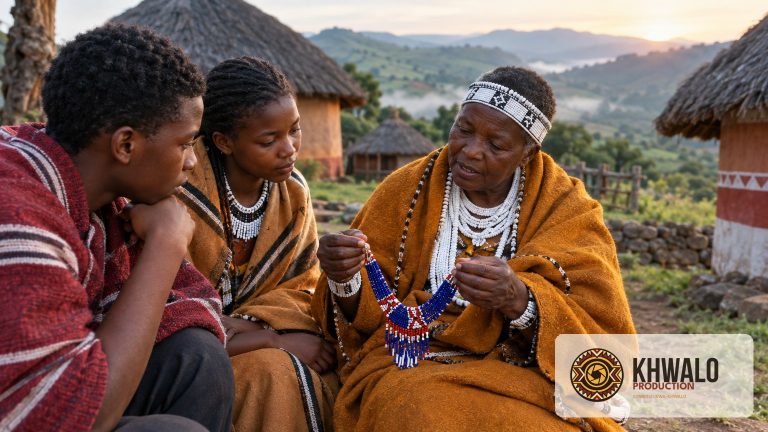
Today, more young South Africans in places like Soweto are proudly returning to their roots – learning their clan praises, wearing beadwork, and asking elders about family rituals – while keeping their faith. Heritage and belief do not have to compete; together they tell us who we are.
A question for every family
Talk to your elders: What did your grandparents believe? Which rituals has your family kept, and which were lost? Recording these stories is one of the best ways to protect our heritage for the children who come after us.