One Root, Many Branches: The Xhosa-Speaking Nations and What Unites Them
When people say “Xhosa”, they often mean one group. In truth, isiXhosa is spoken by several proud nations, each with its own kings, history and identity. The Khwalo clan, rooted among the amaMpondo, belongs to this wider family.
The nations
- amaXhosa – the house of Phalo, later divided into the amaGcaleka and amaRharhabe.
- abaThembu – an ancient kingdom of the Mthatha and Qumanco areas; Nelson Mandela was born into the Thembu royal house.
- amaMpondo – the kingdom of eMpondweni along the Wild Coast, between the Mthatha and Mtamvuna rivers.
- amaMpondomise – close neighbours and relatives of the amaMpondo.
- amaBomvana – known for keeping old customs and dress alive.
- amaMfengu (amaFengu) – families who settled among the Xhosa in the early 1800s and became part of the nation.
- amaBhaca, amaXesibe and amaHlubi – communities who share the language and many customs.
What we share
Language and isiduko
All of these nations speak isiXhosa, with local dialects. Everyone carries an isiduko (clan name) and praises such as our own Mzangwa, Ncuthu, Mlanjana. Your clan name tells people who your ancestors were, and people of the same clan treat each other as family.
Ancestors and ubuntu
Respect for izinyanya (the ancestors) is central. Families speak to the ancestors through ceremonies, slaughtering and umqombothi, and believe that a person is a person through other people – umntu ngumntu ngabantu.
Rites of passage
Ceremonies such as imbeleko (introducing a child to the ancestors), ulwaluko (initiation of young men), intonjane for young women, and lobola in marriage are shared across the nations, with local differences.
Beadwork, dress and music
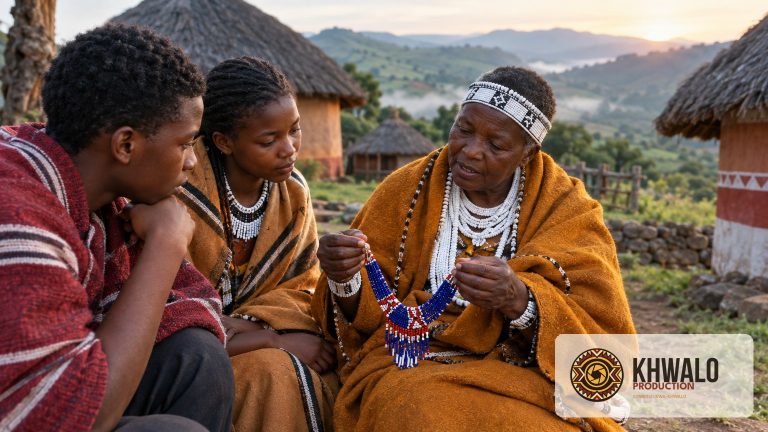
Beadwork colours and patterns, the white and ochre of traditional dress, umngqungqo dances and umrhubhe songs all carry messages about age, status and home area.
Different, yet one
Each nation keeps its own royal line and its own story, and that diversity is something to celebrate. But at family gatherings in Soweto or in the villages of the Eastern Cape, the same greeting, the same respect for elders and the same praises bring everyone together.
Do you know which nation your family comes from? Ask your elders and share it with the next generation.