16 June 1976: The Day Soweto’s Youth Changed History
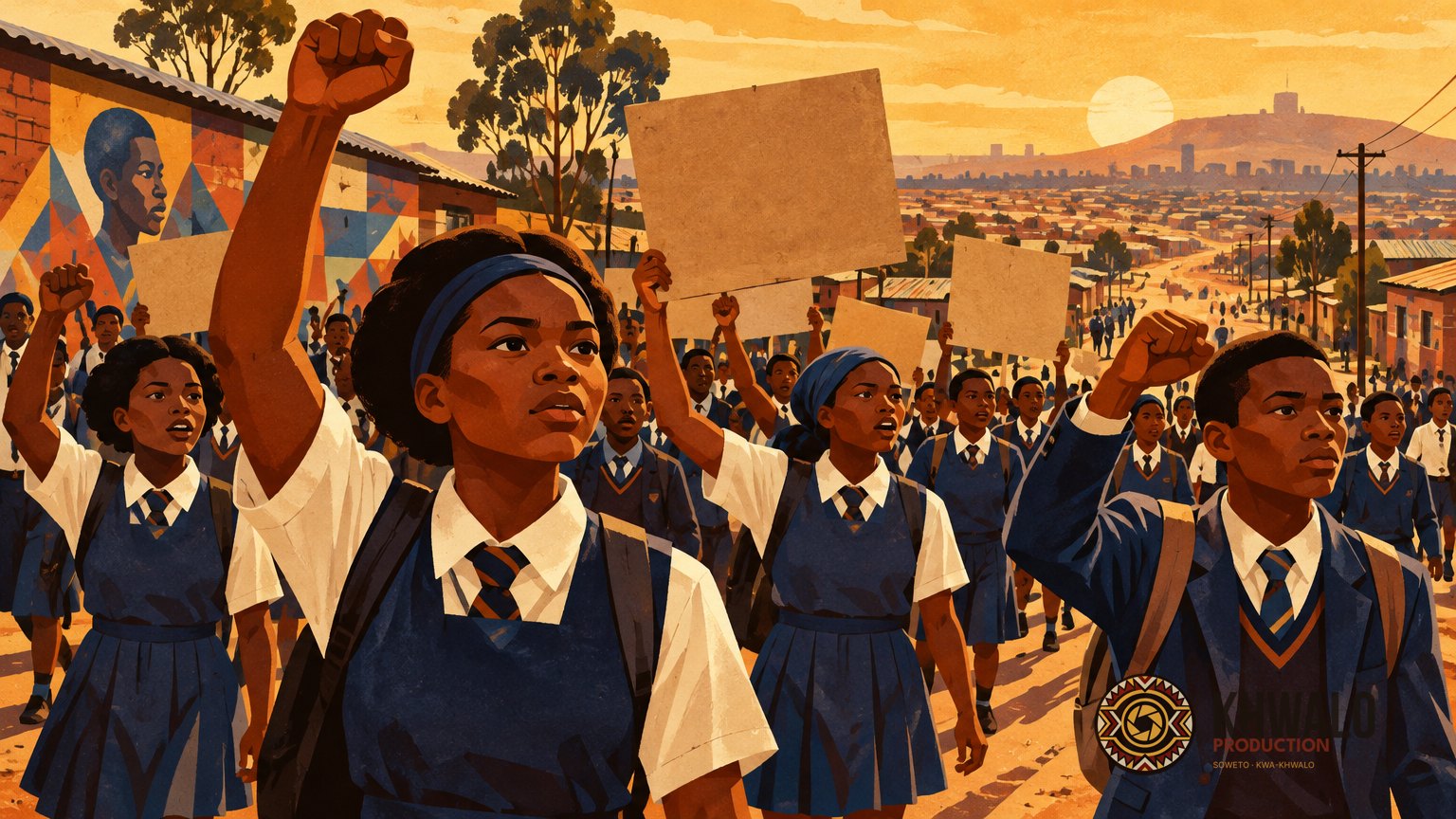
On the morning of 16 June 1976, thousands of school learners in Soweto marched peacefully through the streets. What happened that day changed the course of South African history.
Why the students marched
The apartheid government had ordered that Afrikaans be used as a medium of instruction in black schools, alongside English. For learners already suffering under the unequal Bantu Education system, this was the final straw. Students organised through the Soweto Students’ Representative Council and planned a peaceful protest.
The march
Learners gathered from schools across Soweto and set off towards Orlando Stadium carrying placards and singing. Police opened fire on the crowd. Among the first to die was 12-year-old Hector Pieterson. The photograph of him being carried by Mbuyisa Makhubo, with his sister Antoinette running beside them, was seen around the world.
The uprising spreads
The protests spread across Soweto and then the country. Hundreds of young people lost their lives in the months that followed, and many left to join the liberation movements. The uprising showed the world the courage of South Africa’s youth.
Remembering today
Since 1994, 16 June has been a public holiday, Youth Day. The Hector Pieterson Memorial and Museum in Orlando West stands close to where he fell, a place where families still bring their children to learn.
A lesson for our children
The class of 1976 reminds us that education, language and identity are worth standing up for. As a family, we honour their sacrifice by teaching our young ones to value learning and to be proud of who they are.