Lobola Today: Tradition, Money and Meaning
Few customs spark as much conversation in South African families as lobola (ikhazi in isiXhosa). To some it is a beautiful bond between two families; to others it has become an expensive barrier to marriage. Both views deserve a hearing.
What lobola really means
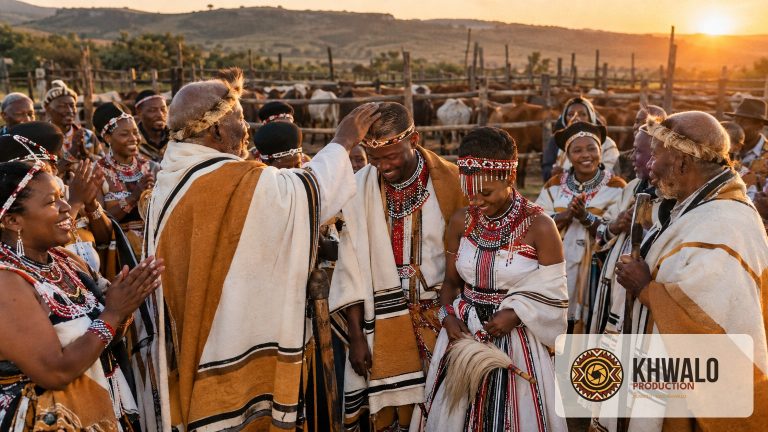
Lobola is not “buying a wife”. Traditionally, it is a gift from the groom’s family to the bride’s family that does three things: it honours the parents who raised her, it joins two families (not just two people), and it shows that the groom is serious and able to take responsibility. Once lobola has been agreed, the two families become relatives with duties to one another.
How negotiations work
- The delegation. The groom does not negotiate himself. His uncles and elders (abakhozi) go to the bride’s home.
- The letter and the knock. Families often agree a date by letter. On the day, the delegation may wait outside until they are invited in, a sign of humility.
- Counting in cattle. Amounts are still discussed in cattle (iinkomo), even when they are paid in cash. Each cow may be valued at an agreed rand amount.
- Small gifts first. There may be a fee to “open the mouth” (vula mlomo) before talks begin.
- Celebration. When agreement is reached, the families share a meal and often slaughter an animal.
Why cattle?
For the amaMpondo and Xhosa, cattle were wealth, food, ceremony and status. Giving cattle meant giving something precious. The symbol remains even in Soweto, where few families keep a kraal.
The modern debate
Many young couples say lobola has become commercialised: some families set amounts based on a bride’s degree or salary, and couples go into debt or delay marriage for years. Others argue that a meaningful amount protects respect for the bride. A healthy middle path is possible:
- Remember that the goal is unity, not profit.
- Let elders on both sides speak honestly about what is affordable.
- Agree on payment in parts if needed; many families accept this.
- Do not let lobola replace the deeper preparation for marriage: faith, communication and shared values.
Lobola and faith
Many Christian families keep lobola as an expression of honour and family unity while leaving out rituals that involve consulting ancestors. Scripture itself contains bride-price customs (Genesis 34:12, Exodus 22:16), and its emphasis is on covenant and love, not money.
Done with respect, lobola is one of the most beautiful ways our culture says: we are now one family.
Khwalo! Mzangwa! Ncuthu! Mlanjana!