Openly Practising Traditional Healing: A Gift from God or from the Watchers?
This article is written from a Christian faith perspective as part of Khwalo Production’s conversation about faith and culture. It is not an attack on any person or family. Many traditional healers sincerely want to help, and many families hold both church and custom. Our aim is to help readers think, pray and choose with understanding.
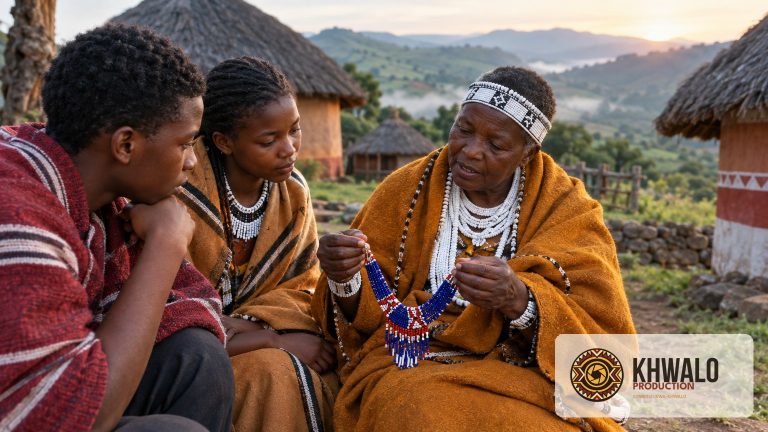
Today traditional healing is practised openly. Initiates in white beads walk through Soweto, amagqirha advertise on social media, and many families say a relative has “a gift” (ubizo, the calling). For a Christian, the honest question is not whether the healer is kind or whether the healing seems to work. The question is: where does the power come from?
The claim: “My gift comes from God”
Many healers say, “I pray to uQamata, and the ancestors only carry my prayers.” It sounds close to faith. But Scripture tests a gift by its source and method, not by its results. Jesus warned that some would do wonders in His name and still hear, “I never knew you” (Matthew 7:22–23). Pharaoh’s magicians also copied real signs (Exodus 7:11–12). Power alone proves nothing.
Three reasons it cannot be from God
- It comes through the dead. The calling usually arrives through dreams of departed relatives who demand training, rituals and sacrifice. God forbids consulting the dead: “There shall not be found among you… a consulter with familiar spirits, or a wizard, or a necromancer” (Deuteronomy 18:10–12). A gift God gives never requires breaking His own word.
- It replaces the one Mediator. “There is one God, and one mediator between God and men, the man Christ Jesus” (1 Timothy 2:5). If the ancestors must carry prayers, Christ is pushed aside.
- It comes with bondage. The calling often arrives through illness, misfortune and pressure: “accept it or you will suffer.” Gifts of the Holy Spirit are given freely (1 Corinthians 12:7–11) and bring freedom (2 Corinthians 3:17), not fear.
The Watchers: an ancient explanation
The Book of Enoch (1 Enoch 6–8), quoted in Jude 14–15, describes two hundred angels called Watchers who left heaven, took human wives and taught people forbidden secrets. Among them:
- Semjaza taught enchantments and the cutting of roots, the secret use of herbs for spiritual power.
- Armaros taught how to undo or resolve enchantments, the work of counter-spells and protection charms.
- Baraqijal, Kokabel and others taught astrology, signs and reading omens, the root of divination.
- Azazel taught weapons, ornaments and make-up, knowledge that fed pride and violence.
Place this list beside the practices of divination today: roots and herbs mixed for spiritual effect, protection against witchcraft, throwing bones to read the future, interpreting signs. The similarity is striking. Many Christians therefore believe that this knowledge did not come down from God as a blessing, but was passed to humanity by rebellious spirits, and continues to be passed down through spirits who present themselves as family.
Why the gift feels real
Healers often do know things they could not have learned naturally. The Bible does not deny that. In Acts 16:16–18 a slave girl with “a spirit of divination” told the truth about Paul, yet Paul cast the spirit out. Accurate knowledge is exactly what a familiar spirit offers, because it is familiar with the family. Satan “is transformed into an angel of light” (2 Corinthians 11:14).
Herbs are not the problem
God made plants, and using herbs as medicine is not sin (Ezekiel 47:12). The line is crossed when herbs are mixed with incantations, spirits, sacrifices or instructions from the dead, the very “root-cutting with enchantments” the Watchers taught.
Openly practising does not make it right
Healing is now legal, celebrated and part of national heritage. But public approval does not change its source. Isaiah 8:19 asks: “Should not a people seek unto their God? For the living to the dead?”
A better way for the family
- Honour, do not consult. Remember the elders, tell their stories, care for their graves and keep their values, without praying to them.
- Seek healing in Christ. Pray, ask the church elders to pray (James 5:14–15), and use doctors and clinics.
- Break the calling in prayer. If a family member feels pressured into ubizo, the name of Jesus is greater than any family spirit (Colossians 2:15).
- Keep the culture. Language, praise names, respect, ubuntu and togetherness belong to us. We do not need to give them up to follow Christ.
The Khwalo family will always be Mzangwa, Ncuthu, Mlanjana. Our heritage is a gift worth keeping, and our healing and guidance come from the living God.